

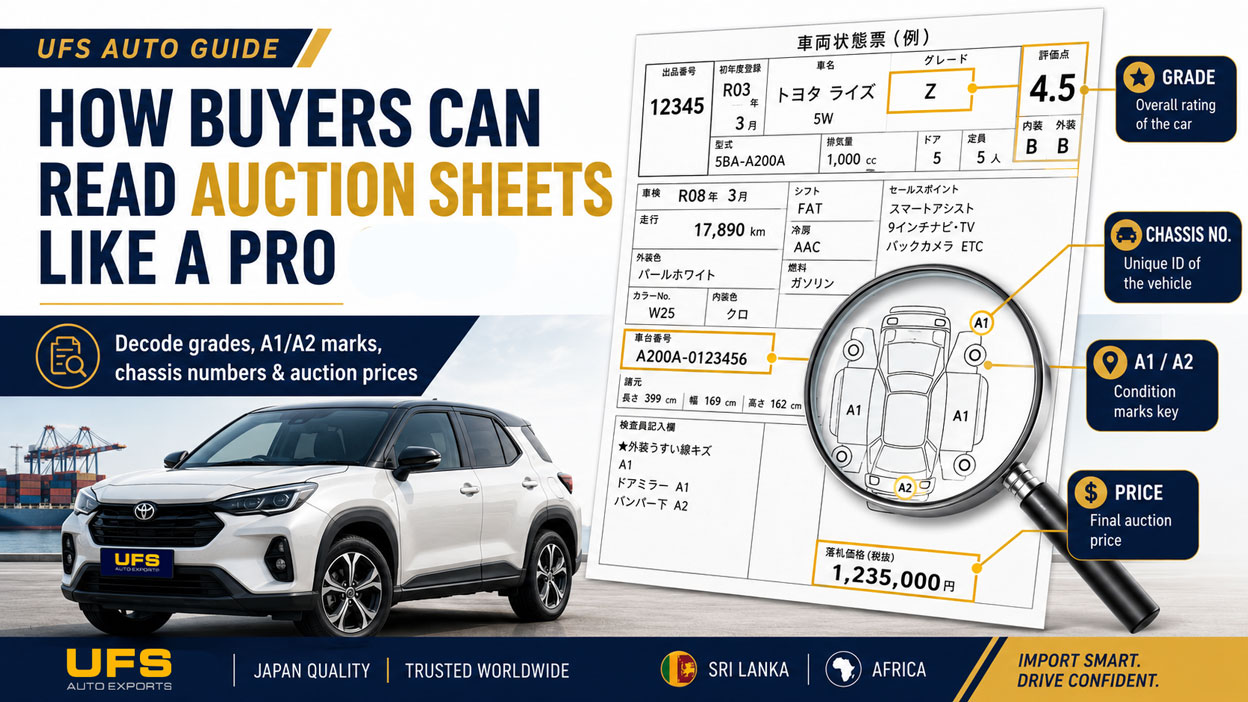
1. Introduction: Don’t Buy Blind from Japan
The car looks perfect in the photos.
Clean body. Low mileage. Nice alloy wheels. Fresh-looking interior. Maybe even that “just arrived from Japan” shine that makes every buyer say, “This one looks good, no?”
Then someone checks the auction sheet.
Suddenly, the conversation changes.
“Wait… this panel has repair marks.”
“There is a W mark here.”
“This chassis number needs to be checked before bidding.”
That is why Japanese auction sheets matter.
When buying or importing a used vehicle from Japan, photos are useful, but they do not tell the full story. A car can look beautiful in pictures and still have scratches, dents, repair marks, rust, mileage issues, or interior wear mentioned on the auction sheet.
A Japanese auction sheet is usually the first serious inspection report buyers should check before purchasing a used car from Japan. It is prepared by professional inspectors and gives an overview of the vehicle’s condition, history, mileage, grade, and visible defects.
For buyers in Sri Lanka, South Africa, Botswana, Zambia, Tanzania, Mozambique, and Zimbabwe, this knowledge is very important. Importing from Japan is a big financial decision. If you miss an important warning on the auction sheet, the mistake can become expensive after the car is shipped, cleared, and registered.
Smart buyers do not only ask:
“How much is the car?”
They also ask:
“What does the auction sheet say?”
Because the auction sheet helps you understand whether a vehicle is clean, fairly priced, suitable for import, and worth bidding on.
In this guide, UFS Auto explains how buyers, importers, and used car dealers can read Japanese auction sheets like a pro in 2026.
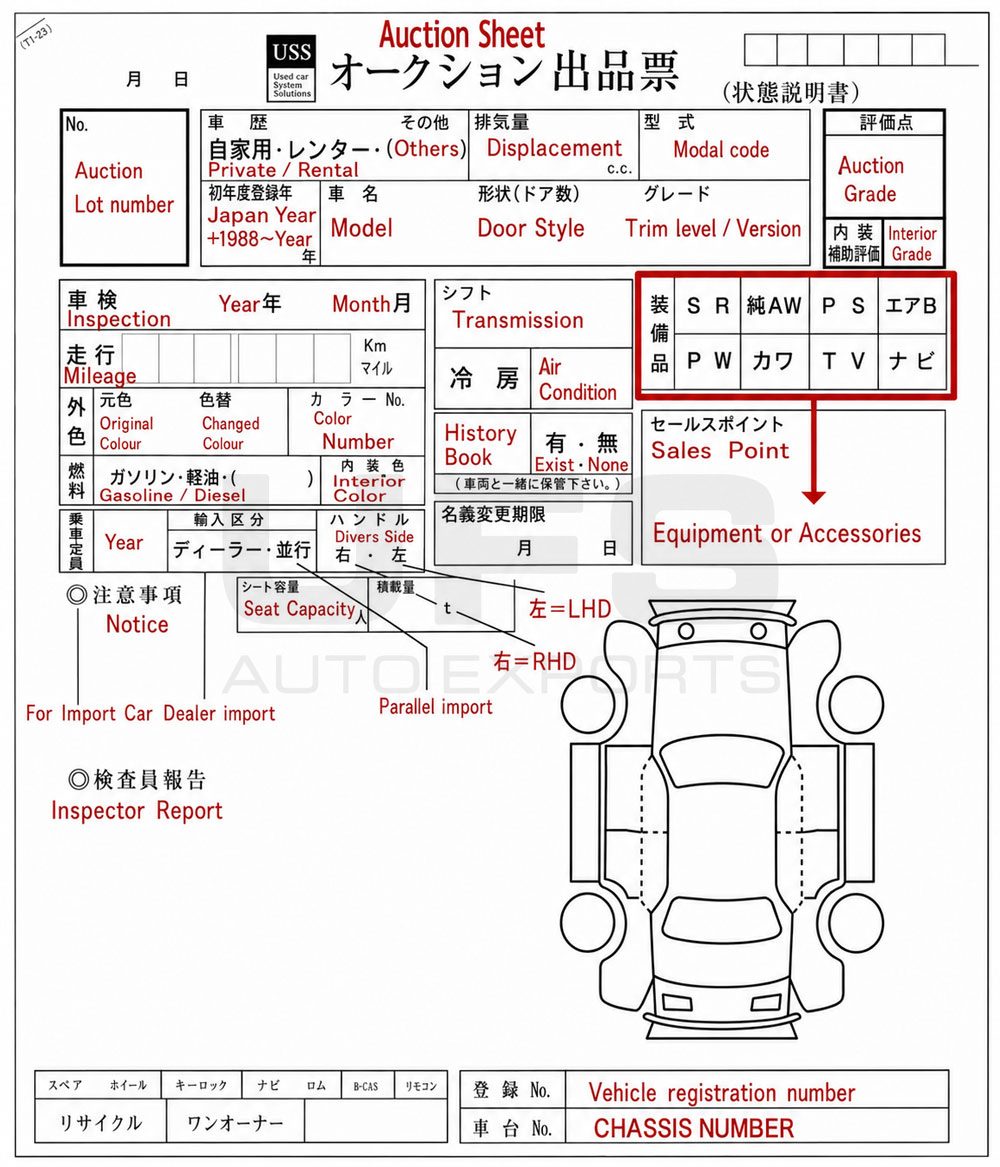
2. What Is a Japanese Auction Sheet?
A Japanese auction sheet is a professional inspection report used at vehicle auctions in Japan. It gives buyers a clear summary of the car’s identity, condition, mileage, features, defects, and overall grade before the vehicle is sold.
Proof Before You Buy: We Show You the Auction Sheet
At UFS Auto, we believe buyers should never purchase a Japanese vehicle based on photos alone. We show you the auction sheet, explain the vehicle grade, check the chassis number, and help you understand the real condition before you bid.
Before you bid, ask UFS Auto to verify the auction sheet for you.
Think of it as the car’s “truth sheet.”
Photos may show the best angles. The auction sheet shows the areas that need attention.
A typical Japanese auction sheet may include:
| Auction Sheet Detail | What It Tells You |
| Auction lot number | The vehicle’s auction reference number |
| Chassis number | The unique identity number of the vehicle |
| Year / month | Registration or model-related detail |
| Make and model | Vehicle brand and model |
| Grade / trim | Version or package of the vehicle |
| Mileage | Distance already travelled |
| Transmission | Automatic, manual, CVT, etc. |
| Engine size | Engine capacity |
| Equipment | Features such as AC, airbags, alloy wheels, power steering |
| Auction grade | Overall condition rating |
| Interior grade | Cabin condition |
| Exterior grade | Body condition |
| Inspector comments | Notes about repairs, warnings, or defects |
| Vehicle diagram | Map showing scratches, dents, rust, or replaced panels |
Many first-time buyers make the mistake of looking only at photos, mileage, colour, and price. But experienced buyers always ask for the auction sheet first.
Why?
Because the auction sheet may reveal problems that photos do not clearly show, such as scratches, dents, paint repair, rust, replaced panels, mileage warnings, or interior damage.
In simple words:
The auction sheet does not just tell you what the car is. It tells you what the car has been through.
Want to Avoid Common Myths About Japan Used Cars?
Many buyers believe every Japanese used car is automatically clean, accident-free, or low-risk. The truth is, every vehicle should be checked properly with a verified auction sheet before export so you can understand the grade, mileage, damage marks, and real condition before buying.
Read Myths vs Facts3. How to Check an Auction Sheet Before Buying
Before buying a Japanese used car, do not rush straight to the price.
Grade 5 or Disguised Grade R? We Check Before You Buy
A car may look clean in photos, but the auction sheet tells the real story. At UFS Auto, we vet every sheet to check the grade, chassis number, repair marks, and hidden auction details before you make a buying decision.
Grade 5 or disguised Grade R? We vet every auction sheet to protect your investment.
DM UFS Lanka for EnquiriesYes, price matters. Everyone likes a good deal. But in Japanese auctions, a “cheap” car can become expensive if the auction sheet shows hidden repairs, rust, mileage issues, poor interior condition, or body damage.
Before you bid, follow this simple checking process.
1. Check the Chassis Number First
The chassis number is one of the most important details on the auction sheet. It confirms the exact identity of the vehicle.
Make sure the chassis number on the auction sheet matches the auction listing, export documents, invoice, and vehicle photos.
If the chassis number does not match, stop and verify before moving forward.
2. Check the Overall Auction Grade
The auction grade gives a quick idea of the vehicle’s condition.
However, do not judge the car only by the grade. A vehicle may have a good grade but still include repair comments or visible body marks.
Always read the full sheet.
3. Check the Interior and Exterior Grades
Many auction sheets show separate grades for interior and exterior condition.
| Grade Area | What to Check |
| Interior grade | Seat wear, stains, burns, dashboard damage, bad smell |
| Exterior grade | Scratches, dents, paint repair, rust, corrosion, panel replacement |
A vehicle may look clean outside but have a worn interior. This matters for personal buyers and dealers because interior condition affects comfort, resale value, and buyer confidence.
4. Read the Inspector Comments
Inspector comments can include important notes about repair marks, warning lights, oil leaks, rust, missing parts, or interior smell.
If the comments are in Japanese, do not guess. Get them translated properly.
5. Study the Vehicle Diagram
The vehicle diagram shows where damage is located on the car.
Common marks include:
| Mark | Meaning |
| A | Scratch |
| U | Dent |
| B | Dent with scratches |
| W | Repair wave or repair trace |
| S | Rust |
| C | Corrosion |
| X | Replacement required |
| XX | Panel replaced |
The number beside the mark shows how serious the damage is. For example, A1 is usually a small scratch, while A2 is more visible.
6. Check Mileage Notes
Mileage is a major part of vehicle value. Check whether the mileage looks clear and trusted. If there are mileage warning symbols, ask for expert help before bidding.
7. Compare the Sheet with the Price
After checking the condition, compare it with the auction price.
Ask:
- Is the grade suitable for the price?
- Are the marks minor or serious?
- Is the mileage clear?
- Will repair costs affect the final landed cost?
- Is this vehicle still good value after shipping, taxes, and clearing?
8. Get Expert Verification Before Bidding
If you are not fully sure, do not guess.
Send the auction sheet to UFS Auto before bidding. The team can help check the chassis number, explain the grade, translate key comments, review damage marks, and confirm whether the vehicle is worth buying.
If you do not understand the auction sheet, do not bid yet.
4. How to Interpret a Japanese Auction Sheet Step by Step
Reading a Japanese auction sheet can feel confusing at first.
There are numbers, Japanese words, short codes, grades, and marks on a vehicle diagram. For a first-time buyer, it may look complicated. But once you know the order, it becomes much easier.
The best way to read an auction sheet is step by step.
Step 1: Confirm the Vehicle Identity
Start with the basic details:
| Detail | Why It Matters |
| Make and model | Confirms the vehicle |
| Chassis number | Confirms the exact car |
| Year / registration | Affects import rules and value |
| Engine size | Affects taxes and buyer demand |
| Mileage | Affects price and resale value |
| Transmission | Confirms automatic, CVT, manual, etc. |
| Grade / trim | Helps compare features and value |
Before getting excited about the colour or wheels, confirm that the vehicle identity is correct.
Step 2: Check the Auction Grade
The auction grade gives a quick condition summary.
| Auction Grade | Simple Meaning |
| S | Almost new condition |
| 6 | Excellent condition |
| 5 | Very clean used vehicle |
| 4.5 | Good condition with minor flaws |
A smart buyer does not stop at:
“It is Grade 4.5, so it must be good.”
A smart buyer asks:
“Why did it get this grade, and what does the full sheet say?”
Step 3: Review Interior and Exterior Grades
Interior and exterior grades help you understand how clean the car is inside and outside.
| Grade | Buyer Meaning |
| A | Very clean |
| B | Good, with some minor flaws |
| C | Noticeable defects, may need small repairs |
| D | More serious defects |
| E / F | Poor condition, needs major attention |
For dealers, this matters because a clean interior can help the vehicle sell faster.
A nice exterior attracts the buyer. A clean interior helps close the sale.
Step 4: Read the Damage Diagram
The diagram shows scratches, dents, rust, repair marks, cracks, or replaced panels.
| Mark | Meaning | Buyer Risk |
| A | Scratch | Low to medium |
| U | Dent | Low to medium |
| B | Dent with scratches | Medium |
| W | Repair wave / repair trace | Medium to high |
| S | Rust | Medium to high |
| C | Corrosion | High |
| X | Replacement required | High |
| XX | Panel replaced | High |
A car can look perfect in photos but show repair marks or replaced panels on the auction sheet.
That does not always mean you must reject it. But it does mean you must understand the risk before bidding.
Step 5: Read the Inspector Comments Carefully
Inspector comments may mention:
- Repainted panels
- Repair history
- Warning lights
- Engine noise
- Oil leaks
- Rust underneath
- Interior smell
- Missing parts
- Mechanical issues
Do not guess Japanese comments. Get them checked properly.
Step 6: Compare Condition with Market Value
After reading the sheet, compare the vehicle condition with the auction price.
Ask:
- Is the price fair for the condition?
- Are the marks minor or costly?
- Is the mileage clear?
- Will the vehicle be suitable for Sri Lanka or Africa?
- Will the final landed cost make sense?
Do not buy the lowest auction price. Buy the best value.
5. What Are Japanese Auction Grades?
Japanese auction grades are condition ratings used by auction houses to help buyers understand the quality of a vehicle before bidding.
In simple terms, the auction grade is the inspector’s quick summary of the car’s condition.
But the grade is only one part of the story. A smart buyer checks the grade together with mileage, interior grade, exterior grade, damage marks, comments, and price.
Buyer-Friendly Auction Grades
| Auction Grade | What It Usually Means | Buyer Advice |
| S | Almost new condition, usually very low mileage | Excellent choice, but usually expensive |
| 6 | Very close to new condition | Premium option for buyers who want top quality |
| 5 | Very clean used vehicle with minor marks | Strong choice for personal buyers and resale |
| 4.5 | Good condition with minor flaws | Often a good balance between price and quality |
Clean Grade Buyer Tip
For many buyers in Sri Lanka and Africa, Grade 4.5 and above can give stronger confidence because these vehicles are usually cleaner and easier to resell.
However, even with higher grades, buyers should still check:
- Mileage
- Interior condition
- Exterior condition
- Damage diagram
- Inspector comments
- Final landed cost
A Grade 4.5 vehicle with small A1 marks may be a good option. But if the comments mention repair work, warning lights, or rust, the vehicle still needs careful checking.
So the real question is not only:
“What is the grade?”
The better question is:
“Does the full auction sheet support the grade?”
6. What Do A1 and A2 Mean in an Auction Sheet?
When buyers first see marks like A1, A2, U1, B2, or W3, they often wonder:
“Is this serious, or is this just auction sheet code?”
Once you understand the system, it becomes easier.
In Japanese auction sheets, the letter usually tells you the type of defect. The number tells you how big or serious it is.
A1 Meaning
A1 usually means a small scratch.
This is often minor and may be found on:
- Front bumper
- Rear bumper
- Door
- Fender
- Bonnet
- Mirror cover
For most used cars, A1 is not a major concern. It may only need polishing or a small touch-up.
A2 Meaning
A2 means a more visible scratch than A1.
It is not always serious, but it should be checked carefully. Depending on the colour and location, it may need polishing, touch-up, or repainting.
| Mark | Meaning | Buyer Risk |
| A1 | Small scratch | Low |
| A2 | More visible scratch | Low to medium |
| A3 | Larger scratch | Medium |
| A4 | Heavy scratch | Higher concern |
A1 and A2 usually do not mean accident damage. But they should be checked together with other marks.
For example:
| Sheet Situation | Buyer Meaning |
| A1 only | Usually minor |
| A2 only | Check photo and location |
| A2 with U2 | Scratch plus dent |
| A2 with W2 | Scratch plus repair trace |
| A2 with XX | Scratch plus replaced panel |
UFS Auto buyer tip:
A1 is usually minor. A2 needs a closer look. Anything combined with W, X, XX, rust, or corrosion needs expert verification.
7. How to Check Auction Insights and Sold Prices
Reading the auction sheet tells you the vehicle’s condition.
Checking auction insights tells you whether the price makes sense.
This is where smart buyers separate a real deal from a risky one.
Before saying:
“This one is cheap. Let’s bid!”
Ask:
“Cheap compared to what?”
Auction insights can include:
| Auction Insight | What It Helps You Understand |
| Previous sold prices | What similar vehicles sold for recently |
| Grade comparison | Whether the price matches the condition |
| Mileage comparison | Whether low mileage is increasing the price |
| Model and year comparison | Whether the vehicle is fairly priced |
| Defect comparison | Whether damage is affecting value |
| Final bid price | The actual auction price in Japan |
| Market demand | Whether the model is popular in your country |
For example, two vehicles may look similar in photos. But one may be Grade 4.5 with small scratches, while another may have repair marks or visible dents.
If you only compare photos, both may look good.
If you compare auction sheets and sold prices, the real difference becomes clear.
The golden rule is:
Do not buy only because the auction price is low. Buy because the auction sheet and final cost make sense.
8. How Can I Check a Chassis Number?
The chassis number is the vehicle’s unique identity number. Think of it as the car’s fingerprint.
Two cars may have the same model, colour, year, and mileage range. But they should not have the same chassis number.
Before you bid, ship, or pay, check the chassis number carefully.
What to Match
| Source | What to Check |
| Auction sheet | Main vehicle identity |
| Auction listing | Same chassis number |
| Vehicle photos | Chassis plate if visible |
| Export certificate | Must match after purchase |
| Invoice | Should show the same vehicle |
| Shipping documents | Must match export records |
| UFS Auto stock record | Confirms internal tracking |
If one document shows a different number, stop and verify.
No chassis match, no confidence.
Red Flags
| Red Flag | Why It Matters |
| Missing chassis number | Vehicle identity is unclear |
| Blurred chassis number | Hard to verify |
| Listing and sheet do not match | Possible wrong sheet |
| Export documents show another number | Serious document issue |
| Chassis code does not match model | Vehicle identity may be wrong |
Before you check the shine, check the chassis.
9. How to Read Japanese Yen Auction Prices
Japanese auction prices are usually shown in Japanese Yen, written as JPY or ¥.
A buyer may see ¥1,800,000 and quickly convert it to local currency.
But remember:
The yen auction price is not the final cost of the car.
It is only the starting point.
Auction Price vs Final Landed Cost
| Term | Meaning |
| Auction price | Price paid for the car in Japan |
| FOB price | Vehicle price plus Japan-side costs |
| C&F / CFR price | Vehicle cost plus freight |
| CIF price | Vehicle cost plus insurance and freight |
| Landed cost | Total cost after shipping, taxes, clearing, and registration |
Simple formula:
Auction Price + Japan Costs + Freight + Taxes + Clearing + Registration + Repairs = Final Landed Cost
Do not fall in love with the yen price. Calculate the landed cost.
Planning to Import a Japanese Used Car to Sri Lanka?
Reading the auction sheet is only one part of the buying journey. If you want to understand the full process, including Japan auction bidding, export documents, shipping, customs clearance, taxes, and registration, read our complete guide on how to import Japanese used cars to Sri Lanka .
Read the Sri Lanka Import Guide10. How to Read a Japanese Vehicle Auction Result
A Japanese vehicle auction result shows what happened after the vehicle went through auction.
It tells you:
- Did the car sell?
- Was it unsold?
- What was the final bid price?
- Was the price fair for the condition?
Auction results help buyers understand the real market value of a vehicle in Japan.
| Auction Result Detail | Meaning |
| Auction house | Where the vehicle was listed |
| Auction date | Date of auction |
| Lot number | Auction reference number |
| Make and model | Vehicle brand and model |
| Chassis number | Vehicle identity |
| Mileage | Distance travelled |
| Auction grade | Overall condition |
| Final bid price | Highest bid or sale price |
| Result status | Sold, unsold, passed, or negotiation |
Auction result shows the price. Auction sheet explains the reason behind the price.
11. UFS Auto Auction Sheet Verification Checklist
Before bidding on a Japanese auction vehicle, take one final pause.
Ask:
“Do I fully understand this auction sheet?”
Use this checklist before buying.
| Checkpoint | What to Confirm |
| Chassis number | Matches all records |
| Make and model | Correct vehicle |
| Year / registration | Suitable for your market |
| Engine size | Correct for tax and demand |
| Mileage | Clear and trusted |
| Auction grade | Preferably 4.5 or above for cleaner units |
| Interior grade | Suitable for personal use or resale |
| Exterior grade | Acceptable body condition |
| Damage marks | Minor and understood |
| Inspector comments | Translated and checked |
| Auction result | Fair price compared with similar cars |
| Landed cost | Fully calculated |
If too many warning signs appear, do not rush.
There will always be another vehicle at auction. But fixing the wrong purchase can be costly.
Before you bid, send the auction sheet to UFS Auto for verification.
12. Final Advice: Read the Sheet Before You Trust the Shine
Japanese used cars are popular for a reason.
They are reliable, practical, well-built, and often available with great features. For buyers in Sri Lanka, South Africa, Botswana, Zambia, Tanzania, Mozambique, and Zimbabwe, Japanese auctions can offer strong value.
But every buyer should remember this rule:
Do not trust the shine before you read the sheet.
A car may look beautiful in photos. The colour may be perfect. The mileage may look attractive. The price may feel like a must-buy deal.
But the auction sheet tells the deeper story.
It can show scratches, dents, repair marks, rust, corrosion, replaced panels, mileage issues, interior wear, or accident repair history.
That is why learning to read a Japanese auction sheet is buyer protection.
Buying for Africa? Understand the Full Journey
Reading the auction sheet helps you understand the car’s condition. But if you are importing to Botswana, Zambia, Tanzania, Mozambique, Zimbabwe, South Africa, or other African markets, you should also understand how vehicles move from Japanese auctions to Africa , including purchase confirmation, inspection, export documents, shipping, port clearance, and final delivery.
Read the Japan to Africa GuideBefore buying, check:
- Chassis number
- Auction grade
- Interior and exterior grades
- Damage marks
- Inspector comments
- Mileage notes
- Auction result
- Yen price
- Final landed cost
A cheap auction price is not always a good deal.
Before you bid, send the auction sheet to UFS Auto for expert verification. UFS Auto can help you understand the grade, translate key comments, check the chassis number, review auction insights, and estimate whether the vehicle makes sense for your market.
Final takeaway:
Photos show how the car looks. The auction sheet shows what the car has been through.