
If you are planning to import a vehicle from Japan to Sri Lanka, you have probably already checked the CIF price, auction grade, mileage, colour and duty estimate.
But here is the part many buyers miss.
A vehicle can look perfect, the auction sheet can look clean, and the price can look attractive, but if the JAAI certificate or approved pre-shipment inspection document is missing or incorrect, the import process can become stressful very quickly.
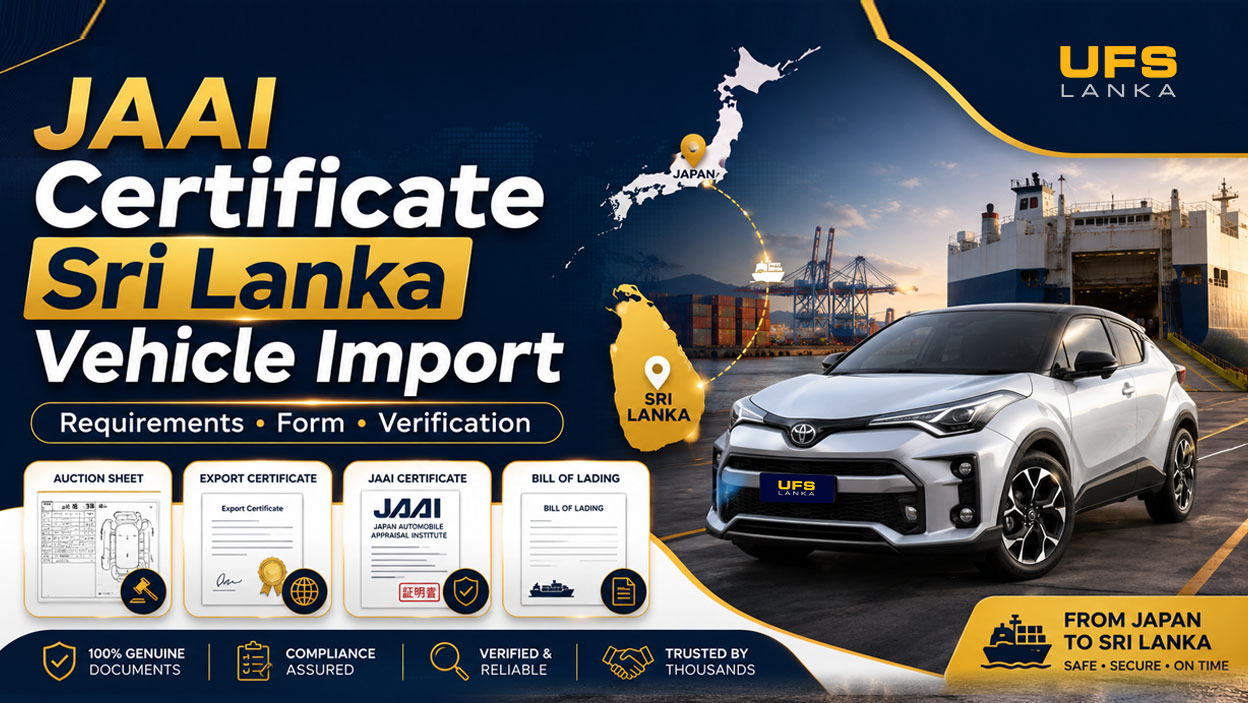
In this guide, we explain the JAAI certificate Sri Lanka vehicle import requirements, the JAAI certificate Sri Lanka vehicle import form, how to verify the certificate, and what Sri Lankan buyers should check before paying for a Japanese vehicle.
Key Takeaways
- JAAI certificate is a Japan-side pre-shipment inspection certificate used when importing used vehicles from Japan to Sri Lanka.
- Sri Lanka vehicle imports require a valid certificate of export inspection from an authorized inspection body for used vehicles under HS codes 87.02, 87.03, 87.04 and 87.05. (Sri Lanka Customs)
- JAAI certificate and auction sheet are not the same. The auction sheet helps you understand the vehicle condition, while the JAAI certificate supports export inspection and clearance.
- JAAI certificate Sri Lanka vehicle import form is usually handled by the exporter or Japan-side import coordinator, not directly by the Sri Lankan buyer.
- Sri Lankan buyers should check the chassis number, export certificate, invoice, auction sheet, Bill of Lading and inspection certificate before paying the full amount.
- UFS Lanka can help buyers check Japanese vehicle documents, auction sheets, CIF estimates and import readiness before reservation.
What Is a JAAI Certificate for Sri Lanka Vehicle Import?
A JAAI certificate is a pre-shipment inspection certificate issued through the Japan Auto Appraisal Institute for used Japanese vehicles before export.
For Sri Lankan buyers, this certificate is important because it supports the import document process. It helps confirm that the vehicle has gone through the required Japan-side inspection before it is shipped.
JAAI stands for Japan Auto Appraisal Institute. In simple Sri Lankan buyer language, when someone says, “Does the car have JAAI?” they usually mean, “Does this vehicle have the correct pre-shipment inspection certificate for Sri Lanka?”
This is different from asking for the auction sheet. The auction sheet shows auction condition. The JAAI certificate supports the export and clearance process.
For example, if you are importing a Toyota Raize Hybrid, Suzuki Wagon R, Daihatsu Mira, Honda Vezel or Nissan Dayz from Japan, the certificate details should match the same vehicle shown on the export certificate, invoice and shipping documents.
A good rule is simple: never check one document alone. Check the full document set.
You can also browse Japanese used cars for Sri Lanka and ask whether the selected vehicle can be arranged with the correct Sri Lanka-accepted inspection certificate.
Why Is the JAAI Certificate Important for Sri Lanka Vehicle Import?
A JAAI certificate is important because Sri Lanka requires used imported vehicles to have a valid export inspection certificate from an authorized inspection body.
According to Sri Lanka Customs published Gazette information, used motor vehicles under HS codes 87.02, 87.03, 87.04 and 87.05 must undergo pre-shipment inspection and have a certificate of export inspection issued by an authorized inspector. (Sri Lanka Customs)
That means the certificate is not just “extra paperwork.” It is part of the import document chain.
When you import a vehicle, the process normally involves:
- Exporter in Japan
- Inspection body
- Shipping company
- Bank or LC process
- Sri Lanka Customs
- Clearing agent
- Buyer
If one document does not match, the whole process can slow down.
For example, if the chassis number on the invoice is different from the chassis number on the inspection certificate, your clearing agent may need extra clarification before moving forward. Even one wrong letter or number can create unnecessary stress.
This is why we always tell buyers: do not only ask for the price. Ask for the documents.
For more details about the full buying process, use UFS Lanka Japan to Sri Lanka car import support before confirming your vehicle.
What Are the JAAI Certificate Sri Lanka Vehicle Import Requirements?
JAAI certificate Sri Lanka vehicle import requirements include a valid pre-shipment inspection certificate, matching vehicle identity details and correct supporting documents.
Sri Lanka Customs Gazette information states that the export inspection should have supporting documents such as a certified copy of the cancelled vehicle registration certificate, the export inspection certificate and a condition report with vehicle description and accessories. (Sri Lanka Customs)
For a Sri Lankan buyer, the main thing is not just whether the certificate exists. The main thing is whether the certificate matches the vehicle and is accepted for Sri Lanka.
Basic Documents You Should Check
Before the vehicle leaves Japan, ask your exporter or importer to confirm these documents:
| Document | Why It Matters |
| JAAI, JEVIC or approved inspection certificate | Supports pre-shipment inspection requirement |
| Export certificate | Confirms Japan-side deregistration and export details |
| English translation | Helps with bank, clearing and Sri Lanka-side document review |
| Auction sheet | Shows auction grade, mileage and condition notes |
| Commercial invoice | Shows buyer, seller, vehicle and price details |
| Bill of Lading | Confirms vessel, shipment and consignee details |
| Condition report | Supports inspection and vehicle description |
These documents should work together. If one document says one thing and another document says something else, that is a red flag.
Details That Must Match
When checking the documents, pay attention to:
- Chassis number
- Make and model
- Model code
- First registration year and month
- Engine details where applicable
- Buyer or consignee details
- Exporter details
- Inspection date
- Shipment details
For example, if you are buying a 2025 Toyota Raize Hybrid Z Grade, the model code, chassis number, year and vehicle details should be consistent across the auction sheet, invoice, export certificate and inspection certificate.
This small step can save a big headache later.
What Is the JAAI Certificate Sri Lanka Vehicle Import Form?
The JAAI certificate Sri Lanka vehicle import form is normally the Japan-side inspection application used to arrange the export inspection before shipment.
Most Sri Lankan buyers do not personally fill this form. Usually, the exporter, yard, Japan-side agent or import coordinator handles the form because the vehicle is physically in Japan.
JAAI’s export inspection procedure says the application form is available at JAAI branch offices, and a copy of the Export Certificate is listed as one of the required attachments. (JAAI)
So when Sri Lankan buyers search for “JAAI certificate Sri Lanka vehicle import form,” they are usually looking for one of these three things:
- The Japan-side JAAI inspection application form
- A copy of the actual inspection certificate
- The document checklist needed for bank, LC or customs clearance
The practical answer is this: ask your exporter or importer to confirm the inspection certificate arrangement before shipment.
What Information Is Usually Needed?
The Japan-side inspection process usually needs vehicle and export details such as:
- Chassis number
- Make
- Model
- Model code
- Export certificate details
- Vehicle location in Japan
- Destination country
- Exporter or applicant details
- Inspection appointment details
If you are buying through UFS Lanka, you can send the vehicle link, stock ID or auction sheet and ask the team to check whether the required inspection document can be arranged.
Want to Understand the Full Japan to Sri Lanka Import Process?
From choosing the right vehicle in Japan to checking documents, arranging shipment, customs clearance and final delivery in Sri Lanka, the import process becomes easier when you know each step clearly.
JAAI Certificate vs Auction Sheet: What Is the Difference?
A JAAI certificate confirms export inspection status, while an auction sheet shows the vehicle condition at auction.
Both are important, but they are not the same document.
Many buyers make the mistake of thinking a good auction sheet is enough. It is not.
The auction sheet helps you decide whether the car is worth buying. The JAAI certificate helps support the vehicle’s export and import document process.
| Item | JAAI Certificate | Auction Sheet |
| Main purpose | Export and pre-shipment inspection | Auction condition report |
| Issued by | Inspection body such as JAAI | Japanese auction house |
| Used for | Import document support | Buying decision |
| Shows | Vehicle identity and inspection status | Grade, mileage, scratches, dents and repair notes |
| Checked when | Before shipment and clearance | Before bidding or reservation |
| Buyer risk if missing | Clearance and document delay | Bad buying decision |
Here is the simple way to understand it.
The auction sheet tells you, “Should I buy this car?”
The JAAI certificate helps answer, “Can this car move through the export and import process properly?”
For Sri Lanka buyers, both questions matter.
Check the Auction Sheet Before You Buy
Before importing a vehicle from Japan to Sri Lanka, make sure the auction sheet matches the chassis number, mileage, grade, repair notes and overall vehicle condition.
Read Auction Sheet Verification GuideHow to Verify a JAAI Certificate Before Buying a Vehicle?
JAAI certificate verification means checking whether the certificate is genuine, readable and matched to the same vehicle you are buying.
This step should happen before you pay the full amount. Ideally, it should happen before shipment.
An older Sri Lankan buyer-focused article also warns buyers to validate JAAI and JEVIC certificates before paying an advance, especially when checking details such as certificate number, chassis number and engine number.
JAAI Certificate Verification Checklist
Before you move forward, check these points:
- Chassis number matches the auction sheet, invoice and export certificate.
- Certificate number is visible and not edited.
- Make and model match the vehicle listing.
- Model code matches the selected vehicle.
- Inspection date makes sense before shipment.
- Mileage information is consistent where shown.
- Document copy is clear, complete and not cropped.
- Inspection body is accepted for Sri Lanka.
- Exporter details match the invoice and document flow.
- Clearing agent confirms the document set before arrival.
Do not rely only on photos, stickers or verbal promises.
A sticker on the vehicle is not enough. A clean-looking PDF is also not enough if the details do not match.
The safest approach is to check the certificate together with the full import file.
When Is the JAAI Certificate Arranged in the Japan to Sri Lanka Import Process?
The JAAI certificate is usually arranged after vehicle purchase and export document preparation, but before the vehicle is shipped from Japan.
That timing is important.
If the inspection certificate is delayed, the shipment or document process can also be delayed. If the certificate has an error, it is much easier to fix before the vehicle leaves Japan than after it arrives in Sri Lanka.
Typical Import Flow
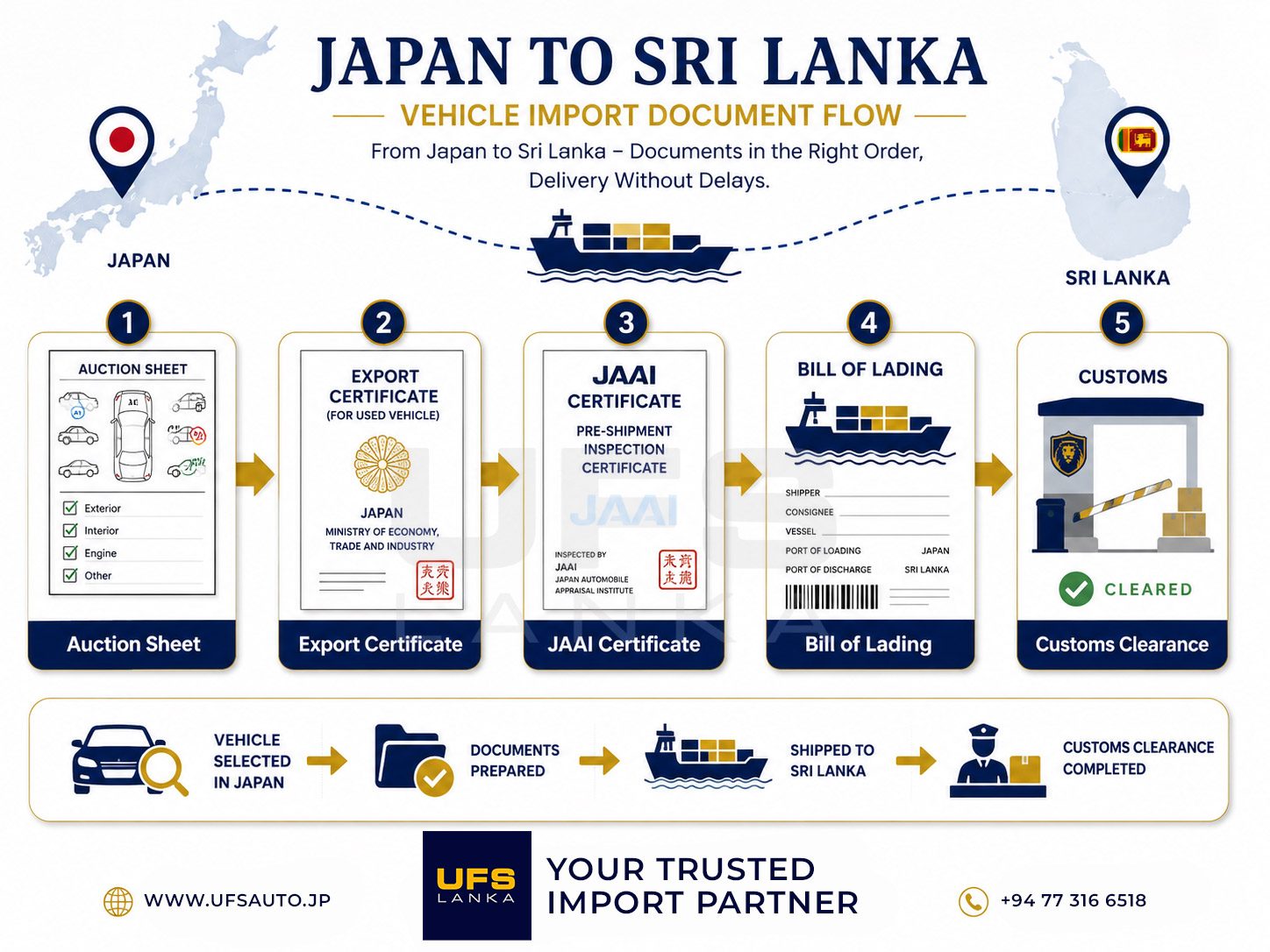
Here is the usual flow for a Japanese vehicle import:
- Vehicle search
The buyer checks available stock, auction sheet, grade, mileage and price. - Reservation or auction bidding
The buyer confirms the unit or gives a maximum bid. - Proforma invoice
The exporter provides invoice details for payment or LC process. - Export certificate preparation
Japan-side deregistration and export documents are arranged. - JAAI or approved inspection
The vehicle goes through pre-shipment inspection. - Shipping booking
The vehicle is booked by RoRo vessel or container. - Document dispatch
Export documents move through the bank or courier process. - Sri Lanka customs clearance
The clearing agent uses the document set for clearance. - Final release and registration
The vehicle is released after duty and local requirements.
This is why we always recommend checking documents early.
For available vehicles, you can visit available Japanese vehicles for Sri Lanka and ask the UFS Lanka team to confirm document readiness before reservation.
What Problems Can Happen Without a Valid JAAI Certificate?
A missing or incorrect JAAI certificate can cause customs clearance delays, bank document issues and extra costs after the vehicle reaches Sri Lanka.
This is the part buyers usually understand only when it is too late.
A small document issue in Japan can become a big headache in Colombo.
Common JAAI Certificate Problems
The most common problems include:
- Chassis number mismatch
- Missing certificate
- Wrong inspection type
- Poor-quality certificate scan
- Export certificate mismatch
- Late document arrival
- Incorrect bank document routing
- Buyer paying before checking the full file
Sri Lanka Customs Gazette information also refers to the way vehicle documents should be handled through the banking process for Letters of Credit, including original registration-related documents and English translations. (Sri Lanka Customs)
So, this is not something to take lightly.
If the document set is not correct, the vehicle may arrive, but the clearance process can become delayed.
And when clearance is delayed, other costs can start building.
How Can Sri Lankan Buyers Check Vehicle Details Online?
Sri Lankan buyers can use official and importer-supported checks to reduce document risk before and after shipment.
Online checks are helpful, but they do not replace proper document verification.
Sri Lanka Customs provides a vehicle verification portal that asks for chassis number, NIC or passport number and mobile number. (Sri Lanka Customs)
That alone shows how important vehicle identity is in the import process.
Useful Checks Before Importing
Before you confirm a vehicle, use these checks:
- Ask for the auction sheet
- Ask for the chassis number
- Ask for export certificate status
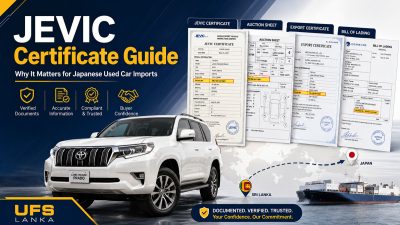
- Ask whether JAAI, JEVIC or another approved certificate will be arranged
- Ask for CIF price
- Ask for estimated Sri Lanka landing cost
- Ask for shipping timeline
- Ask your clearing agent if the document set is acceptable
This is also where UFS Lanka can help.
Instead of guessing alone, send the vehicle details to the team and ask for a document review before you pay.
What Should You Ask Before Importing a Vehicle from Japan to Sri Lanka?
Sri Lankan buyers should ask document, inspection, price and clearance questions before paying for a Japanese vehicle.
The best buyers do not only ask, “How much?”
They ask, “Is this vehicle safe to import?”
Buyer Questions to Ask
Before paying, ask:
- Is this vehicle eligible for Sri Lanka import?
- Will it have a JAAI, JEVIC or approved inspection certificate?
- Can I see the auction sheet?
- Does the chassis number match the export documents?
- What is the CIF price?
- What is the estimated landing cost with taxes and clearing?
- What is the shipping timeline?
- Who handles the document process?
- Will the original documents be sent correctly?
- Can I verify the certificate before shipment?
These questions are simple, but they protect you.
A cheap vehicle is not always the best deal. A properly checked vehicle is the better deal.
Need Help Importing a Vehicle from Japan?
From auction sheet checking to JAAI certificate, export documents, CIF price and shipping updates, UFS Lanka helps Sri Lankan buyers import Japanese vehicles with more confidence and less confusion.
- Check vehicle eligibility for Sri Lanka
- Review auction sheet and chassis details
- Confirm JAAI / JEVIC inspection requirement
- Get CIF price and import guidance
How UFS Lanka Helps With JAAI Certificate and Vehicle Import Documents
UFS Lanka helps Sri Lankan buyers check vehicle documents, inspection requirements and import readiness before confirming a Japanese vehicle.
The goal is simple.
We want you to understand what you are buying before you pay.
UFS Lanka can help with:
- Auction sheet review
- Vehicle eligibility checking
- Chassis number verification
- CIF estimate support
- Export document coordination
- JAAI, JEVIC or approved inspection status checking
- Shipping timeline updates
- Sri Lanka clearance guidance
This is especially useful for buyers who are importing personally for the first time.
When you import alone, one small mistake can cost time and money. When you work with an experienced team, the process becomes clearer.
You still make the final decision, but you make it with better information.
Final Buyer Checklist Before You Reserve a Vehicle
A final checklist helps Sri Lankan buyers avoid document mistakes before confirming a Japanese vehicle import.
Before you reserve, make sure you have checked:
- Vehicle eligibility for Sri Lanka
- Auction sheet
- Chassis number
- Export certificate status
- JAAI, JEVIC or approved inspection requirement
- CIF price
- Estimated landing cost
- Shipping timeline
- Original document process
- Clearing support
If anything is unclear, ask before paying.
That one question can save you from a much bigger problem later.
Conclusion: Check the JAAI Certificate Before You Buy
A JAAI certificate is one of the most important documents in a Sri Lanka vehicle import because it connects the Japan-side inspection, document process and customs clearance stage.
Do not treat it like a small paper.
Before you reserve a vehicle from Japan, check the auction sheet, chassis number, export certificate and inspection certificate requirement. Make sure everything matches before the vehicle is shipped.
At UFS Lanka, we help Sri Lankan buyers review the vehicle and document details before they move forward.
Planning to import a vehicle from Japan to Sri Lanka? Contact UFS Lanka through WhatsApp today and send us the vehicle link, stock ID or chassis number. We will help you check the JAAI certificate requirement, CIF estimate and import readiness before you buy.
Have a question about JAAI, JEVIC or vehicle import documents? Drop your question in the comments or message UFS Lanka on WhatsApp.
Still Have Questions About JAAI or JEVIC?
If you are unsure about the JAAI certificate, JEVIC inspection, export certificate, auction sheet or Sri Lanka import documents, don’t guess. Ask before you buy.
Drop your question in the comments or message UFS Lanka on WhatsApp for quick guidance.
Ask UFS Lanka on WhatsApp