

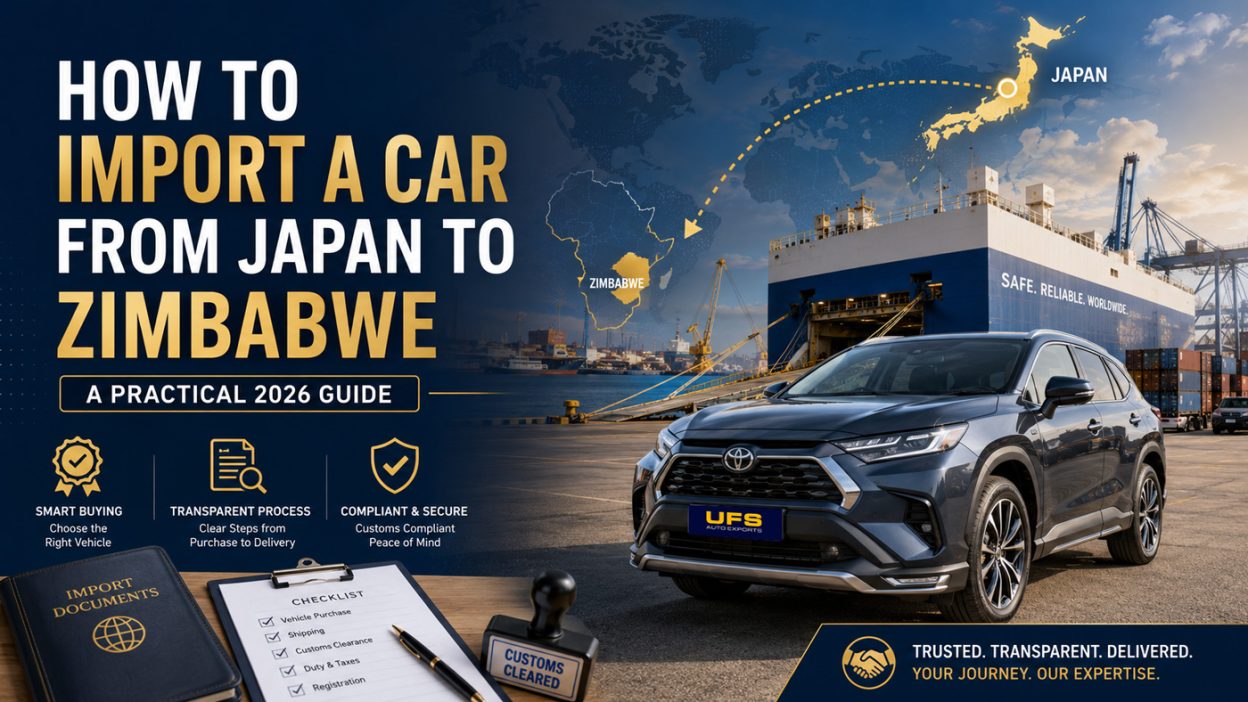
Importing a car from Japan to Zimbabwe can be a smart decision. Japanese vehicles are popular across Zimbabwe for good reason: they are usually right-hand drive, widely available, well specified and often more affordable than comparable vehicles already on the local market.
There is also another advantage. Japan and Zimbabwe both drive on the left side of the road, so most Japanese domestic-market vehicles have the steering wheel on the correct side for Zimbabwean roads. That makes Japanese imports naturally suitable for everyday driving in Harare, Bulawayo, Mutare, Gweru, rural areas and cross-border routes.
Japan’s vehicle market also produces a steady supply of used vehicles. Regular inspection cycles, strong domestic model variety and frequent vehicle replacement mean buyers can access compact cars, SUVs, hybrids, vans, pickups and commercial vehicles with specifications that may be difficult to find locally.
But here is the important part: a Japanese import is not automatically a bargain.
The cheapest car in the listing can become the most expensive car at the border if the buyer ignores age limits, shipping route, customs value, duty exposure, clearing charges, port handling, inland transport and registration requirements. A successful import is decided before the buyer sends the money.
This guide walks through the process chronologically, from budgeting and eligibility to vehicle selection, payment, shipping, customs clearance and final collection in Zimbabwe.
Key Takeaways
Before buying a vehicle from Japan for Zimbabwe, confirm the full landed cost, not only the online stock price. Make sure the vehicle is safely within Zimbabwe’s age limit. Verify the manufacture date, chassis number, auction sheet, condition, mileage and documentation before payment.
Also, do not treat “CIF” as doorstep delivery. Zimbabwe is landlocked. If the quote says CIF Durban, CIF Beira, CIF Maputo, CIF Walvis Bay or CIF Dar es Salaam, the vehicle still needs port handling, inland transit and Zimbabwe customs clearance unless those services are clearly included in writing.
1. Start With the Full Cost, Not Just the Vehicle Price
Many buyers begin with the advertised vehicle price. That is understandable. A stock listing may show a tempting FOB price, and at first glance it can look like the total cost is almost solved.
It is not.
The vehicle price is only one component of the import budget. A realistic Zimbabwe import estimate should separate the purchase price from the landed cost. These are not the same thing.
A practical full-cost formula looks like this:
Purchase + Japan charges + freight + insurance + port costs + inland transit + Zimbabwe taxes + clearing + registration
Each line matters. Japan-side charges may include auction fees, documentation, inland transport to the port, export handling or inspection-related costs where applicable. Freight and insurance depend on the route and shipping method. Port costs depend on the destination seaport. Inland transit depends on whether the vehicle moves from Durban, Beira, Maputo, Walvis Bay or Dar es Salaam into Zimbabwe.
Then comes customs clearance. This is where many budgets become fragile.
Zimbabwe customs charges are not calculated simply from the Japanese website price. Customs may consider the vehicle’s classification, value, freight, insurance and other costs incurred before the vehicle reaches Zimbabwe. VAT is also part of the customs calculation and should not be estimated only on the Japanese stock price.
Zimbabwe’s current standard VAT rate is 15.5%. However, the total tax position depends on the specific vehicle and the customs calculation. Do not rely on a universal percentage copied from an old online example. Vehicle duty can vary according to tariff classification, engine capacity, payload, vehicle type and other characteristics.
This is why a proper quote should be vehicle-specific.
FOB vs CIF: What Buyers Must Understand
FOB and CIF are common terms in Japanese vehicle export, but they are often misunderstood.
FOB, or Free on Board, usually means the seller’s price covers the vehicle and the seller’s agreed responsibilities up to loading the vehicle onto the vessel at the port of shipment. Freight, insurance, destination port charges, customs, clearing and inland delivery are generally not included unless separately agreed.
CIF, or Cost, Insurance and Freight, means the seller pays for cost, insurance and freight to a named destination port. But CIF is not the same as delivery to your home, showroom or final address in Zimbabwe.
For example, CIF Durban is not delivery to Harare. CIF Beira is not delivery to Bulawayo. The named destination is a seaport, and Zimbabwe is landlocked. After the ship arrives, the vehicle still needs port release, transit processing, inland transport, Zimbabwe customs clearance and registration.
A quote should clearly state the named port and what is included after arrival. If the quote only says “CIF Zimbabwe,” ask for clarification. Which port? Are port handling charges included? Is inland transport included? Is Zimbabwe clearance included? Is final delivery included?
Without those answers, the quote is incomplete.
Customs Value Is Not Always the Invoice Price
Some buyers assume that a lower invoice automatically means lower duty. That is risky.
Customs authorities may reject a declared value if it does not reflect a bona fide open-market value. They may compare the declared value with similar vehicles, accepted historical values and the current condition of the imported vehicle.
An unrealistically low invoice can therefore create delays, reassessment, penalties or disputes. A clean transaction file is safer than a suspiciously cheap invoice.
2. Check Whether the Vehicle Is Eligible for Import
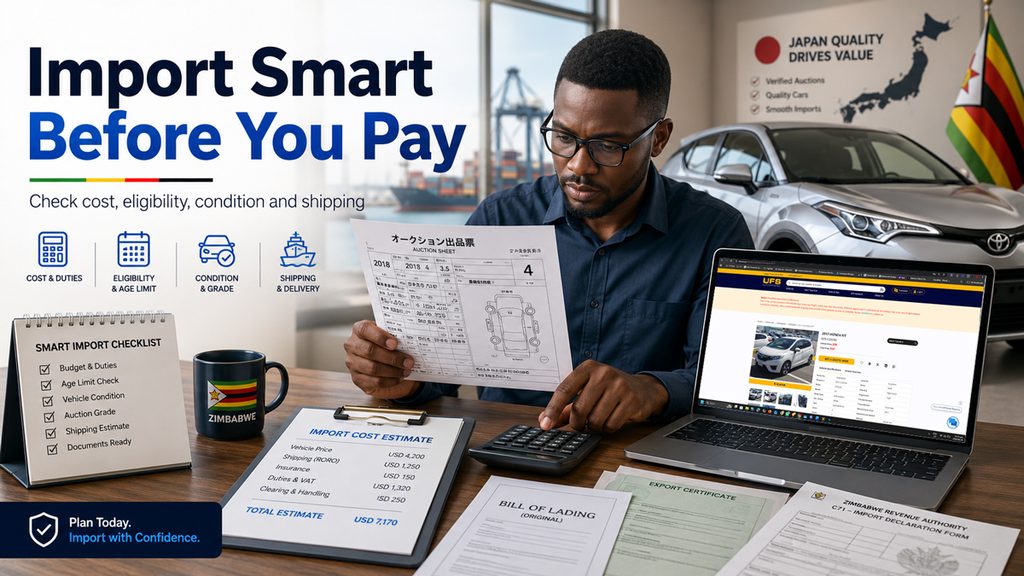
Eligibility must be checked before payment. Not after. Not once the car reaches port. Not when the vessel has already sailed.
ZIMRA states that second-hand vehicles aged ten years and above from the date of manufacture shall not be imported. This wording is important. Avoid the looser phrase “older than 10 years.” The restriction applies to vehicles aged ten years and above from the date of manufacture.
That means the manufacturing date is critical.
A vehicle may be advertised as a certain model year, but the actual manufacture date may be earlier. Model year, first-registration year and manufacturing year are not always the same thing. For import eligibility, the buyer should focus on the manufacturing date and the expected date of import into Zimbabwe.
A borderline vehicle can become a problem if there are delays in auction processing, ownership transfer, export documentation, inspection, shipping schedule or port release. A car that looks acceptable on payment day may become risky by the time it reaches Zimbabwe.
Before paying, ask for chassis-specific manufacturing information and available export documentation. The export certificate is especially important because it connects the vehicle to its official Japanese records.
Classification Also Matters
Eligibility is not only about age. The tariff classification should also be checked.
A sedan, SUV, pickup, van, minibus or commercial truck may be classified differently. Details such as engine displacement, seating capacity, payload, gross vehicle weight and intended use can affect customs treatment.
This is one reason buyers should avoid generic duty percentages. A Toyota Aqua, Toyota Hilux, Nissan Caravan, Honda Fit, Toyota Hiace and Mitsubishi Canter do not necessarily sit in the same duty conversation.
Right-hand drive makes a Japanese vehicle suitable for Zimbabwean road use, but legal importability involves more than steering position. Age, documents, condition, classification and registration requirements still need to be verified.
3. Choose a Vehicle That Makes Sense in Zimbabwe
A good import is not just a clean vehicle. It is a vehicle that makes sense for the buyer’s actual life.
Start with the real use case. Is the vehicle for daily commuting in Harare? Family use in Bulawayo? Rural roads? Business deliveries? Mining work? Farm operations? Long-distance cross-country travel? A car that is perfect for urban fuel economy may be unsuitable for rougher routes or heavy loading.
Zimbabwean road conditions vary. Smooth city roads, pothole-prone streets, gravel routes and long highway journeys all place different demands on a vehicle.
Engine Capacity Affects More Than Fuel Consumption
Many buyers choose small engines to save fuel. That can be wise, especially for city driving. But engine capacity may also influence tariff classification, import cost, resale demand and long-term maintenance.
A 660cc kei car may be economical, but it may not suit every route or load. A 1.5L hybrid may offer excellent fuel economy, but the buyer should understand battery condition and local diagnostic support. A 2.0L SUV may be more comfortable for longer distances, but import costs and fuel use may be higher.
The practical question is simple: is the extra performance worth the lifetime cost?
Ground Clearance and Tyres Matter
Low cars with thin tyres can look stylish and feel refined on good roads. On uneven roads, they may be vulnerable. Bumper damage, underbody scraping, suspension wear and tyre damage can quickly erase the saving made at purchase.
For buyers outside major urban areas, ground clearance should be treated as a serious buying factor. Tyre profile matters too. A vehicle with common tyre sizes is usually easier and cheaper to maintain.
Parts Availability Is Part of Affordability
A rare model can be cheap in Japan but expensive in Zimbabwe. That is the quiet trap.
Before purchase, check the local availability of filters, brake pads, suspension parts, windshields, body panels, lights and diagnostic support. Also check whether local mechanics understand the specific engine and transmission.
Model code can matter as much as the model name. Two cars sold under the same name may use different engines, gearboxes, hybrid systems or electronic components. Search parts availability using the chassis code or model code, not only the marketing name.
Hybrids Need a Different Conversation
Hybrid vehicles can be excellent for Zimbabwean buyers, especially for fuel savings in city driving. But a hybrid should not be bought only because the fuel economy looks attractive.
Ask for battery-health information where available. Check for warning lights. Confirm that both the petrol and electric systems operate normally. Ask whether the vehicle starts, drives, charges and switches between systems correctly.
A healthy hybrid can be a very economical car. An unhealthy hybrid can become an expensive puzzle.
4. Verify the Vehicle Before Paying
The auction grade is useful, but it is not a warranty.
Auction sheets help buyers understand condition, but the headline grade cannot communicate every defect. Different auction houses may also use different grading conventions. A Grade 4 car may still have scratches, dents, paint marks, interior wear or mechanical notes that matter to the buyer.
Read the inspector’s notes and the vehicle diagram. These areas often reveal the real story.
Auction sheets commonly use codes for scratches, dents, repairs, corrosion, paintwork, replacement panels and interior condition. The exact meaning should be interpreted according to the auction house, not guessed.
Be Careful With R and RA Grades
Grades such as R or RA usually require closer investigation. They often indicate repaired or accident-history vehicles, but the severity can vary widely.
A repaired vehicle is not automatically unusable. Some repairs may be minor and properly completed. Others may involve structural damage, poor panel alignment or hidden safety concerns. The buyer needs to understand what was repaired, how serious it was and whether the price properly reflects the risk.
Ask for Chassis-Specific Photographs
Promotional photos are not enough. Photos of a similar model are not enough. A buyer needs proof of the exact vehicle.
Ask for photos of the chassis plate, odometer, dashboard while running, engine bay, underbody, tyres, seats, boot area and visible defects. If the car has warning lights, heavy corrosion, mismatched paint or unusual wear, it is better to discover that before payment.
Underbody condition deserves special attention. A car can look beautiful in exterior photos while hiding corrosion underneath. Rust around suspension areas, structural points and underbody components can become a serious maintenance issue.
Verify Mileage Through Records
Mileage affects price, maintenance planning and trust. Ask for the auction sheet, export certificate, inspection record and any available mileage verification.
If the mileage story does not make sense, pause the transaction. A clean car with unclear mileage is still unclear.
5. Select a Trustworthy Japanese Exporter
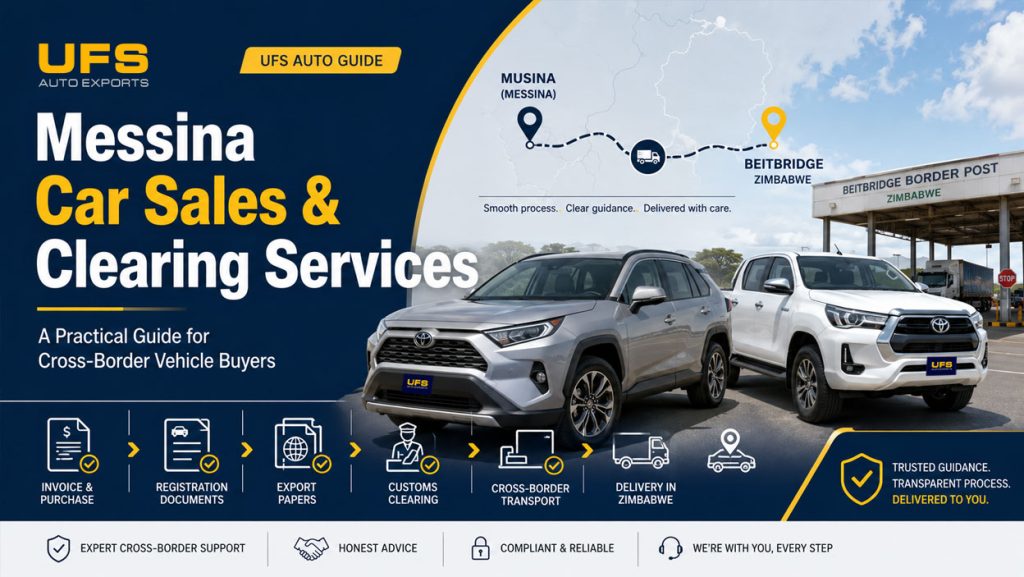
The exporter matters as much as the vehicle.
A polished website, attractive stock photos and an active WhatsApp number do not prove that the seller controls the vehicle. Before sending money, verify the legal company behind the transaction.
Check the registered company name, physical address, landline, invoice details, trade history and bank beneficiary. The bank account should belong to the invoicing company. A request to pay an unrelated individual, a sudden beneficiary change or a last-minute “new account” should be treated with caution.
Ask for Chassis-Level Evidence
A legitimate exporter should be able to identify the exact vehicle. They should provide chassis-specific details, photos, condition information and documentation where available.
If the seller keeps redirecting the buyer to generic stock images or avoids giving the chassis number, the buyer should slow down.
Clarify Responsibility Boundaries
Many disputes happen because the buyer assumes the exporter is responsible for everything. The exporter may only be responsible up to FOB or CIF port. The buyer may still need to arrange port release, inland transit, Zimbabwe customs clearance and registration.
Ask in writing:
Who handles the vessel booking?
Who arranges insurance?
Who handles port release?
Who arranges inland transit to Zimbabwe?
Who handles ZIMRA clearance?
Who is responsible for final delivery?
Who pays storage if documents are delayed?
Industry affiliation can support due diligence. Membership in an organization such as JUMVEA may be a positive signal. But it should not replace invoice verification, bank verification and vehicle verification.
6. Understand the Purchase and Payment Process
The pro forma invoice should identify the exact vehicle. It should not be vague.
A proper invoice should include make, model, chassis number, manufacture year, engine information, price, Incoterm, named port and payment beneficiary. If the quote is CIF, the named port should be clearly written. If inland delivery is included, that should also be written.
Two quotes cannot be compared fairly if one is FOB and the other is CIF. A low FOB price may become more expensive once freight, insurance, port and inland costs are added. A higher CIF quote may be better value if it includes reliable shipping and clearer documentation.
Check Consignee Details Early
Before shipping documents are issued, confirm the consignee details carefully. Names, passport numbers, addresses and contact details must be correct.
A small spelling mistake can create document amendments. Amendments can delay release. Delays can create storage charges. This is an avoidable headache.
Keep a Complete Transaction File
Do not rely on WhatsApp messages alone. Save every important document.
Keep the invoice, bank confirmation, correspondence, freight statement, insurance statement, auction report, vehicle images, export documents and any inspection or condition records. Customs valuation and clearance may require more evidence than the invoice alone.
Payment does not mean immediate sailing. After purchase, the vehicle may still need deregistration for export, export documentation, inland movement, shipping booking and port processing. Vessel cut-off dates can also affect timing.
A patient buyer plans for stages. An impatient buyer often pays for mistakes.
7. From Japan to Zimbabwe: How Shipping Works
Zimbabwe imports require two journeys: a sea leg and an inland leg.
The vehicle first travels from Japan to a regional seaport such as Durban, Beira, Maputo, Walvis Bay or Dar es Salaam, depending on the shipping service and logistics route. After arrival at the port, the vehicle must be released and moved inland toward Zimbabwe.
Arrival at the seaport is a milestone. It is not final delivery.
RoRo Shipping
RoRo means roll-on/roll-off. The vehicle is driven onto the vessel at origin and driven off at destination. This is a common method for operational vehicles because it can be practical and cost-effective.
However, the vehicle normally needs to meet the carrier’s operating conditions. Loose personal items should not be left inside. RoRo is designed for vehicle movement, not for using the car as a cargo box.
Container Shipping
Container shipping is a different service. It is not automatically better, and it is not automatically worse.
A container can offer physical enclosure and may allow consolidated shipments. But loading, securing, unpacking, port handling and documentation can increase complexity and cost. For some vehicles and routes, container shipping may make sense. For others, RoRo may be simpler.
The right choice depends on the vehicle, route, cost, sailing availability and delivery plan.
Import Timeline in Stages
Avoid promises based on a fixed number of days. Shipping timelines can change because of vessel frequency, transshipment, congestion, weather, documentation delays and inland border processing.
A more realistic timeline looks like this:
Purchase → export preparation → booking → departure → sea transit → port release → inland transit → Zimbabwe clearance → registration
Each stage has its own risk. A fast purchase does not guarantee a fast arrival. A vessel delay does not always mean something is wrong. The key is communication and document readiness.
Documents Used During Shipping
The bill of lading is central to release. It identifies the cargo, shipper, consignee and transport arrangement. If the details are wrong, collection can become difficult.
Important documents may include:
Commercial invoice
Export certificate
Bill of lading
Freight statement
Insurance statement
Inspection or condition documents, where applicable
Transit documents, where applicable
The document chain should be consistent. Chassis number, consignee name, vehicle description and shipment details should match across the file.
8. Customs Clearance and Vehicle Collection
Clearing preparation should start before the ship arrives.
Waiting until the vehicle reaches port before assembling documents can create delays, storage charges and unnecessary pressure. A registered clearing agent should receive the documents early enough to prepare the entry, check classification and advise on expected costs.
ZIMRA requires a formal declaration of importer and vehicle particulars. The declaration must include correct vehicle details and value information. False or incorrect declarations can result in reassessment, delay or enforcement action.
Documents Commonly Required
For private motor vehicle importation, documents commonly listed include:
Invoice or agreement of sale
Registration book for a used vehicle
Freight statement
Insurance statement
Export bill of entry and supporting documents
SARPCO police clearance when imported from a Southern African country
Additional documents may be required depending on the route, vehicle and import arrangement.
Use a Registered Clearing Agent
Vehicle classification, valuation, transit bonds and customs entries are specialist work. A registered clearing agent can help reduce errors and manage the process properly.
This is especially important for vehicles entering Zimbabwe after arriving through another country’s seaport. The journey may involve port procedures, transit arrangements and border clearance before final release.
Customs may inspect or reassess the vehicle. The invoice is evidence, but it does not automatically bind ZIMRA if the declared value appears inconsistent with open-market information or similar accepted values.
Registration Comes After Clearance
Paying duty does not automatically make the vehicle ready for legal road use.
After customs clearance, the buyer must complete local registration requirements. Documents may include the Customs Clearance Certificate, police clearance, proof of residence and national identification, depending on the registration process and current requirements.
Only after the correct registration steps are completed should the vehicle be treated as ready for normal road use in Zimbabwe.
9. Mistakes That Make Imports More Expensive
Buying a Borderline-Age Vehicle
A vehicle close to the age limit may become risky during shipping delays. Always calculate age against the expected import date, not only the payment date.
Comparing Sellers by Stock Price Alone
The lowest stock price is not always the cheapest landed vehicle. Compare full cost, route, documentation, condition and responsibility boundaries.
Treating CIF as Doorstep Delivery
CIF usually refers to a named port. Zimbabwe is landlocked. Inland transit, customs clearance and final delivery may still be excluded.
Using a Suspiciously Low Invoice
An unrealistic invoice can be reassessed. It can also damage trust in the clearance process.
Ignoring the Model or Chassis Code
Parts may differ between versions of the same model. Check the chassis or model code before buying.
Relying Only on the Auction Grade
The grade is only a starting point. Read the notes, diagram and defect codes.
Providing Incorrect Consignee Information
Wrong names, addresses or passport details can delay document release and create amendment costs.
Waiting Until Arrival to Appoint a Clearing Agent
By the time the vehicle arrives, storage and port-related clocks may already be running.
Publishing Fixed Duty Percentages Without Checking the Current Tariff
Rates and classifications differ. Old online examples may no longer reflect the current position.
10. A Stronger Pre-Purchase Checklist
Before paying for a Japanese vehicle for Zimbabwe, the buyer should be able to answer yes to every question below.
Is the vehicle safely within the current age limit?
Has the manufacturing date been independently confirmed?
Does the chassis number match every document and photograph?
Has the full auction sheet or condition report been translated?
Have repair history, rust and mileage been investigated?
Is the model practical to service in Zimbabwe?
Does the invoice clearly state FOB, CIF or another term?
Is the named destination a real seaport?
Are port handling and inland transit included or excluded?
Has a current landed-cost estimate been obtained?
Does the bank beneficiary match the verified exporter?
Have the clearing agent and inland route been arranged?
Are the consignee details correct?
Is contingency money available for reassessment, storage or delays?
Final Advice: Decide Before You Pay
Importing a car from Japan to Zimbabwe is not difficult when the process is handled correctly. The problems usually begin when the buyer rushes.
A good import begins before payment. It begins with eligibility checks, a realistic landed-cost estimate, proper vehicle verification, a trustworthy exporter, clear payment documents and a planned shipping route.
The goal is not simply to buy a cheap car in Japan. The goal is to receive the right vehicle in Zimbabwe, legally cleared, properly documented and suitable for long-term use.
That is the difference between a low advertised price and a successful import.