
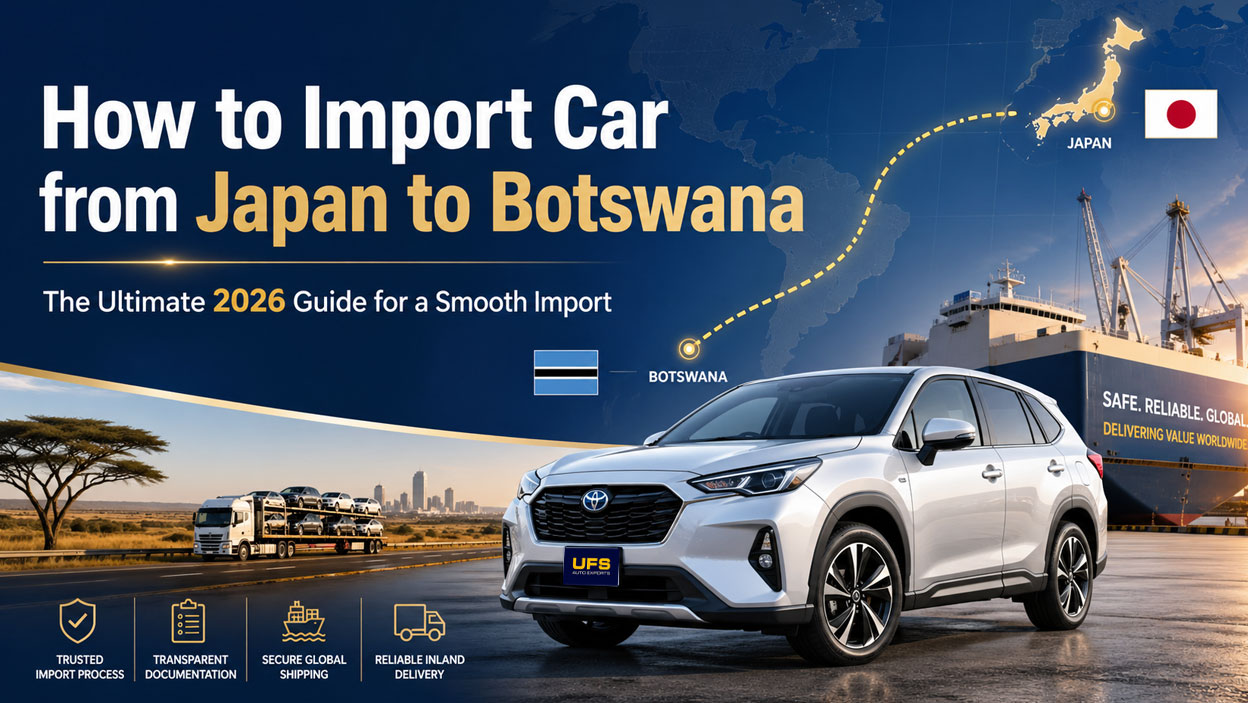
If you are planning to import a car from Japan to Botswana, you have probably already noticed one thing: Japanese vehicles offer strong value, but the import process can feel confusing. The missing piece is usually not the car itself it is the documents, costs, shipping route, customs clearance, and registration steps. In this guide, you will learn exactly how to import a car from Japan to Botswana with fewer delays, fewer surprises, and better cost control.
Key Takeaways
- Japanese car imports are popular in Botswana because they offer reliability, fuel efficiency, and strong long-term resale value.
- Botswana vehicle imports must be cleared through customs, and vehicles entering for home use are liable for customs duties and/or VAT.
- BURS rules state that motor vehicles entering Botswana for home consumption should be cleared within 14 days from the date of entry.
- Import VAT on goods from outside SACU is listed at 12% plus applicable tariff rates – Source: BURS, 2026.
- Used vehicles from Japan require documents such as an invoice and Bill of Lading for Botswana vehicle import/export clearance Source: Botswana Government Portal, 2026.
- Landed cost is more important than FOB price because buyers must include freight, insurance, port charges, inland transport, duty, VAT, clearance, registration, and insurance.
- Trusted exporters and clearing agents reduce risk by checking auction condition, arranging shipping documents, and handling customs paperwork correctly.
What Is Importing a Car from Japan to Botswana?
Importing a car from Japan to Botswana is the process of buying a Japanese vehicle, shipping it to a nearby African port, clearing it through customs, transporting it inland, and registering it for road use in Botswana.
First, the buyer selects a car from Japanese stock, dealer inventory, or auction. For example, a buyer in Gaborone may choose a Toyota Aqua, Honda Fit, Toyota Vitz, Toyota Corolla Fielder, or Toyota Harrier based on budget, fuel economy, and spare-parts availability.
Next, the exporter in Japan prepares the vehicle for shipment. This usually includes invoice preparation, export documentation, booking with the shipping line, and arranging the Bill of Lading.
Then, the vehicle is shipped to a port that serves Botswana. Because Botswana is landlocked, many vehicles arrive through Durban in South Africa or Walvis Bay in Namibia, before being moved by road to Botswana.
Finally, the buyer or clearing agent completes customs clearance, police clearance, registration, and insurance.
Japanese Used Cars for Botswana, Ready to Export
Find quality Japanese used cars suitable for Botswana roads, from fuel-saving hatchbacks to family SUVs and business vehicles. Browse available units and request your export quote today.
Browse Botswana Cars →Why Does Importing a Car from Japan to Botswana Matter?
Importing a car from Japan to Botswana matters because it can give buyers access to better vehicle choice, stronger reliability, and more competitive pricing than many local options.
First, Japan has a large vehicle market with many well-maintained used cars. For example, buyers can find compact fuel savers like the Toyota Aqua, family vehicles like the Toyota Fielder, and SUVs like the Toyota Harrier.
Second, Botswana buyers often value low running costs. A fuel-efficient Japanese hatchback can reduce monthly fuel expenses, while a common Toyota or Honda model can make spare parts easier to source.
Moreover, the process matters because poor planning can turn a good deal into an expensive mistake. For example, a buyer who checks only the FOB price may forget freight, inland transport, customs duty, VAT, clearing fees, and registration costs.
In addition, official compliance matters. BURS states that goods imported into Botswana from outside the SACU market are liable to 12% VAT and applicable tariff rates – Source: BURS, 2026.
Can You Import a Car from Japan to Botswana?
Yes, you can import a car from Japan to Botswana, but the vehicle must be properly documented, cleared through customs, and registered before regular road use.
First, Botswana allows motor vehicles to enter the country, but the process must follow customs and police clearance requirements. BURS states that vehicles entering Botswana for home consumption are liable for customs duties and/or VAT and must be cleared for customs purposes.
Second, the Botswana Government Portal lists specific documents for used vehicles from non-SARPCCO countries. For example, imports from countries such as Japan require an invoice and Bill of Lading for vehicle import/export clearance.
At the same time, buyers should avoid relying only on generic exporter advice. Some online guides provide conflicting information about exact duties, VAT, or vehicle restrictions, so buyers should confirm final figures with BURS, a licensed clearing agent, or a trusted logistics provider before paying.
A Japanese car is import-ready for Botswana only when the purchase, shipment, customs clearance, and local registration documents all match the vehicle chassis number.
Buy Smarter from Japan Car Auctions
Learn how UFS BidDirect helps you access Japanese car auctions, compare vehicles, check auction details, and bid with confidence before importing to Botswana.
Explore UFS BidDirect →What Are the Botswana Car Import Rules for Japanese Vehicles?
Botswana car import rules require imported vehicles to be declared, cleared, and supported with correct documents before they can be used or registered locally.
First, BURS states that motor vehicles entering Botswana for home consumption should be cleared within 14 days from the date of entry into Botswana – Source: BURS, 2026.
Second, temporary imports are different from permanent imports. A temporary vehicle may require a Temporary Import Permit or ATA Carnet, while a permanent import requires customs clearance, duty/VAT payment where applicable, and registration steps.
Third, buyers should understand that “no general restriction” does not mean “no paperwork.” For example, a car shipped from Japan still needs shipping documents, customs documents, and local clearance before it becomes road-ready in Botswana.
| Import Type | What It Means | Key Requirement |
| Permanent import | Vehicle will stay in Botswana | Customs clearance, duty/VAT, registration |
| Temporary import | Vehicle enters for short-term use | Temporary Import Permit or ATA Carnet |
| Transit movement | Vehicle passes through Botswana | Transit/customs documentation |
| Dealer/importer stock | Vehicle imported for resale | Commercial customs and tax compliance |
Moreover, this distinction helps buyers avoid penalties. For example, a resident using a foreign-registered vehicle beyond the permitted period may face customs issues if the vehicle is not properly cleared.
What Documents Are Needed to Import a Car from Japan to Botswana?
The main documents needed to import a car from Japan to Botswana include the commercial invoice, Bill of Lading, Japanese export certificate, ID copy, authorization letter, customs documents, and police clearance documents where required.
First, the commercial invoice proves the vehicle purchase value. For example, the invoice should show the buyer, seller, vehicle details, chassis number, price, and payment information.
Second, the Bill of Lading proves that the vehicle was shipped. For example, it normally shows the shipper, consignee, vessel, port of loading, port of discharge, and vehicle identification details.
Third, the Japanese export certificate proves that the vehicle has been deregistered in Japan for export. In many cases, an English translation helps the clearing and registration process.
In addition, Botswana Police guidance states that used vehicles from non-SARPCCO countries require an invoice and Bill of Lading for vehicle import/export clearance – Source: Botswana Government Portal, 2026.
| Document | Who Usually Provides It | Why It Matters |
| Commercial Invoice | Japan exporter | Confirms purchase value |
| Bill of Lading | Shipping line/exporter | Confirms shipment |
| Export Certificate | Japan exporter | Confirms Japanese deregistration |
| English Translation | Exporter/translator | Helps local processing |
| ID or Passport Copy | Buyer | Confirms importer identity |
| Authorization Letter | Buyer | Allows agent to clear vehicle |
| Customs Declaration | Clearing agent | Required for import clearance |
| Police Clearance Documents | Botswana authorities | Supports registration |
Plus, every document should match the same chassis number. A small mismatch can delay clearance, registration, or police clearance.
Don’t Miss Any Import Documents
Before importing your car from Japan, make sure your invoice, Bill of Lading, export certificate, ID copy, and clearance documents are ready. A simple checklist can help you avoid costly delays.
View Document Checklist →How Much Does It Cost to Import a Car from Japan to Botswana?
The cost to import a car from Japan to Botswana depends on the vehicle price, freight, insurance, customs duty, VAT, port charges, inland transport, clearing fees, registration, and insurance.
First, buyers should understand the difference between FOB and landed cost. FOB is the vehicle price in Japan before freight, while landed cost is the total cost to get the vehicle ready for use in Botswana.
Second, BURS states that assessed customs duty and VAT are payable in Botswana Pula at the time of importation..
Third, goods imported from outside SACU are liable to 12% VAT plus applicable tariff rates.. Some industry sources mention vehicle import duty around 27%, but buyers should verify the exact tariff and valuation method with BURS or a licensed clearing agent before purchase.
| Cost Item | Meaning | Buyer Tip |
| FOB Price | Vehicle cost in Japan | Compare auction grade, mileage, and condition |
| Freight | Ocean shipping cost | Confirm port and shipping method |
| Insurance | Marine cargo protection | Recommended for risk reduction |
| Port Charges | Handling at arrival port | Ask agent before shipment |
| Inland Transport | Port to Botswana | Include cross-border movement |
| Customs Duty | Import tariff | Confirm with clearing agent |
| VAT | Import tax | BURS lists 12% VAT for imports |
| Clearing Fee | Agent service charge | Use experienced agents |
| Registration | Local road-use process | Budget after clearance |
| Insurance | Road cover | Required before normal use |
Moreover, a cheap FOB price can still become expensive if the vehicle has poor condition, high transport cost, or weak parts availability. For example, a rare model with low auction price may cost more to maintain than a common Toyota or Honda.
What Is the Best Shipping Route from Japan to Botswana?
The best shipping route from Japan to Botswana is usually through a nearby regional port such as Durban or Walvis Bay, followed by inland transport to Botswana.
First, Botswana is landlocked, so vehicles cannot arrive directly by sea. For example, a car may be shipped from Yokohama or Nagoya to Durban, then moved by road toward Gaborone, Francistown, Maun, or another destination.
Second, Durban is a common Southern Africa route because it has strong shipping activity and road links into the region. At the same time, Walvis Bay can be useful depending on final destination, shipping schedule, agent network, and total cost.
Third, the best route is not always the cheapest route on paper. For example, a lower ocean freight rate may be cancelled out by higher inland transport, slower clearance, or weaker agent support.
| Route | Best For | Main Consideration |
| Japan → Durban → Botswana | Common Southern Africa movement | Strong route, inland transport needed |
| Japan → Walvis Bay → Botswana | Alternative Namibia route | Compare cost and agent support |
| RoRo Shipping | Standard single vehicles | Usually cost-effective |
| Container Shipping | High-value or multiple units | More protection, often higher cost |
In addition, buyers should confirm whether the quotation includes only ocean freight or the full movement to Botswana.
Explore Japan to Africa Car Shipping Routes
See how UFS connects Japan with key African markets through trusted export networks, shipping routes, and logistics support for smoother vehicle delivery.
View Our Africa Network →Should You Use RoRo or Container Shipping?
RoRo shipping is usually better for standard single vehicles, while container shipping is better for high-value cars, multiple units, or extra protection.
First, RoRo means Roll-on/Roll-off shipping. For example, the vehicle is driven onto the vessel, secured, shipped, and driven off at the destination port.
Second, container shipping means the vehicle is loaded inside a container. For example, a luxury SUV, multiple vehicles, or a car shipped with parts may be safer inside a container.
That being said, container shipping can involve extra loading, unloading, and handling costs. RoRo is often simpler and more economical for one standard used car.
| Shipping Method | Best Use Case | Advantage | Limitation |
| RoRo | One standard vehicle | Lower cost and simple process | Less enclosed protection |
| Container | Luxury or multiple vehicles | Better protection | Higher handling cost |
| Shared Container | Multiple buyers or units | Cost sharing | Requires coordination |
| Dedicated Container | Premium vehicle | Maximum control | Usually more expensive |
Moreover, the right choice depends on budget, vehicle value, shipping availability, and arrival route.
How Do You Choose the Right Car from Japan for Botswana?
The right car to import from Japan to Botswana is a vehicle that matches your budget, road conditions, fuel needs, spare-parts access, and resale expectations.
First, fuel economy matters. For example, Toyota Aqua, Honda Fit Hybrid, and Nissan Note e-Power are attractive for city driving because they can reduce daily fuel costs.
Second, durability matters. For example, Toyota Corolla Fielder, Toyota Axio, Honda Fit, and Toyota Vitz are practical because parts are easier to find than uncommon models.
Third, road suitability matters. For example, buyers who travel outside main cities may prefer SUVs such as Toyota Harrier, Toyota RAV4, Nissan X-Trail, Subaru Forester, or Toyota Prado.
| Buyer Type | Recommended Japanese Cars |
| Budget daily driver | Toyota Vitz, Honda Fit, Suzuki Swift |
| Fuel saver | Toyota Aqua, Honda Fit Hybrid, Nissan Note e-Power |
| Family use | Toyota Corolla Fielder, Honda Shuttle, Toyota Premio |
| SUV buyer | Toyota Harrier, Toyota RAV4, Nissan X-Trail |
| Business/taxi use | Toyota Axio, Toyota Fielder, Toyota Hiace |
| Premium buyer | Toyota Prado, Lexus RX, Toyota Crown |
Plus, buyers should avoid selecting by photos only. An auction sheet, mileage record, chassis number, grade, and inspection notes give a clearer picture of the vehicle.
Find Your Next Car for Botswana Today
From fuel-saving hatchbacks to family SUVs, UFS Auto Exports helps Botswana buyers import trusted Japanese vehicles with clear pricing, export support, and smooth shipping guidance.
Browse Cars for BotswanaHow Do You Buy a Car from Japan: Auction or Ready Stock?
Buying from Japanese auction gives more selection and possible savings, while buying ready stock is faster and easier for first-time importers.
First, Japanese auctions offer thousands of vehicles every week. For example, a buyer can search by model, year, mileage, grade, color, engine size, and budget.
Second, ready stock is simpler because the vehicle is already purchased and available from the exporter. For example, a first-time buyer may prefer ready stock because the price, photos, and shipment timeline are easier to confirm.
Third, auction buying requires careful condition checks. For example, auction grade 4 or 4.5 usually indicates better overall condition, while R or RA may indicate accident repair history.
In addition, the auction sheet should be reviewed before bidding. Check:
- Auction grade
- Mileage
- Chassis number
- Accident history
- Rust or corrosion notes
- Interior grade
- Scratch and dent diagram
- Engine and transmission remarks
Moreover, a trusted exporter can translate the auction sheet, explain condition notes, and prevent emotional overbidding.
How Does Customs Clearance Work in Botswana?
Customs clearance in Botswana is the process of declaring the imported vehicle, submitting documents, paying applicable duty and VAT, and receiving permission for the vehicle to enter local use.
First, customs clearance begins before the vehicle reaches the final stage. For example, the buyer or clearing agent should prepare invoice, Bill of Lading, ID copy, and authorization documents before arrival.
Second, BURS states that vehicles entering Botswana for home consumption should be cleared within 14 days from the date of entry.
Third, a clearing agent can reduce mistakes. For example, the agent can check customs valuation, calculate duties and VAT, submit declarations, and coordinate release.
Before the vehicle arrives, prepare:
- Confirm the Bill of Lading details.
- Check the invoice and chassis number.
- Send documents to the clearing agent.
- Request duty and VAT estimate.
- Arrange inland transport.
- Prepare ID and authorization letter.
- Confirm police clearance requirements.
At the same time, buyers should not delay paperwork until the vehicle reaches the border. Late documents can lead to extra storage, demurrage, or transport delays.
How Do Police Clearance, Registration, and Insurance Work in Botswana?
Police clearance, registration, and insurance are the final steps that make an imported Japanese car legally usable on Botswana roads.
First, police clearance confirms the vehicle’s identity and helps ensure the car is properly documented. For example, Botswana Government Portal guidance lists invoice and Bill of Lading for used vehicles from non-SARPCCO countries such as Japan.
Second, the government portal states that vehicle import/export clearance service time is 24–48 hours.
Third, registration should be completed only after customs clearance and required vehicle checks. For example, the chassis number on the customs documents should match the vehicle and all supporting paperwork.
In addition, insurance is needed before normal road use. A buyer should budget for insurance early instead of treating it as an afterthought.
What Are the Common Mistakes When Importing a Car from Japan to Botswana?
The most common mistakes when importing a car from Japan to Botswana are underestimating total cost, choosing the wrong vehicle, using an unverified exporter, and delaying documents.
First, many buyers focus only on FOB price. For example, a low auction price may look attractive, but freight, inland transport, duty, VAT, clearance, registration, and insurance can change the final cost.
Second, some buyers choose vehicles based only on photos. For example, a shiny exterior may hide accident repair, rust, worn interior, or mechanical issues listed on the auction sheet.
Third, exporter verification is critical. Avoid exporters who:
- Refuse to share company details
- Avoid showing auction sheets
- Give unclear invoices
- Push urgent payment without full vehicle details
- Cannot explain shipping documents
- Offer prices that look unrealistically low
Moreover, document errors are costly. A wrong chassis number, unclear consignee name, or missing Bill of Lading can slow down clearance.
A low vehicle price is not a good deal if the car arrives with poor documents, weak condition, or unexpected clearance costs.
What Tools and Practical Checks Should You Use Before Importing?
The best tools for importing a car from Japan to Botswana are a landed-cost calculator, auction-sheet review, exporter verification checklist, shipping tracker, and customs document checklist.
First, use a landed-cost calculator before you pay. For example, calculate FOB price, freight, insurance, inland transport, duty, VAT, clearing fee, registration, and insurance before confirming the vehicle.
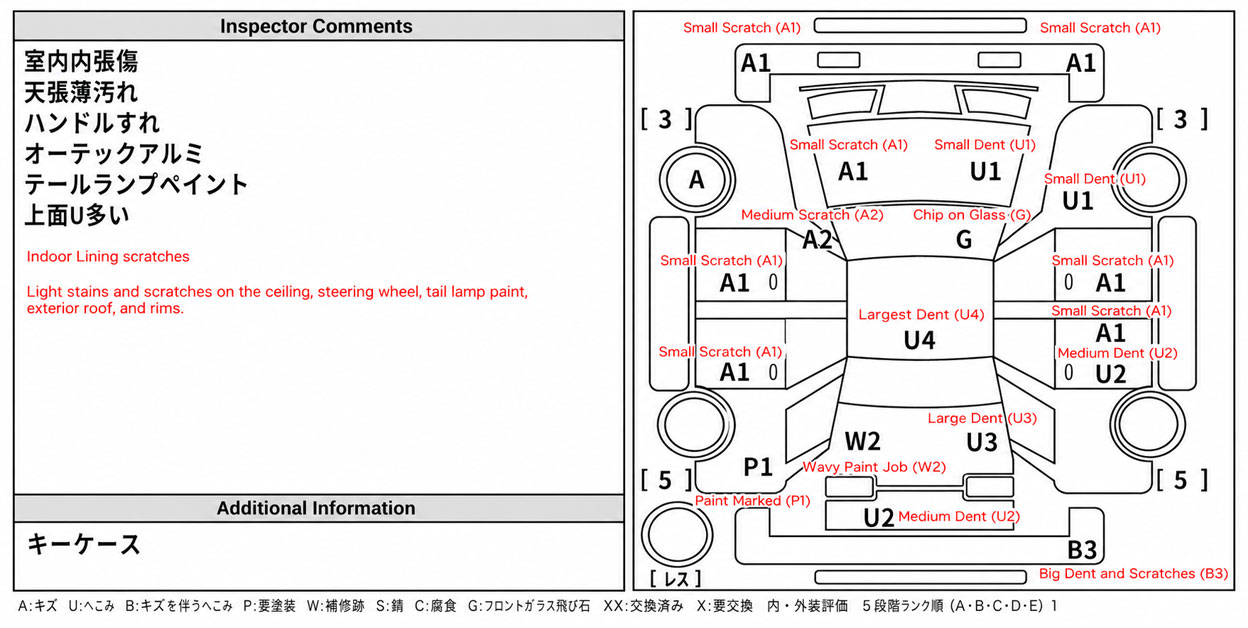
Second, use an auction-sheet review process before bidding. For example, check grade, mileage, accident history, rust notes, interior condition, and diagram marks.
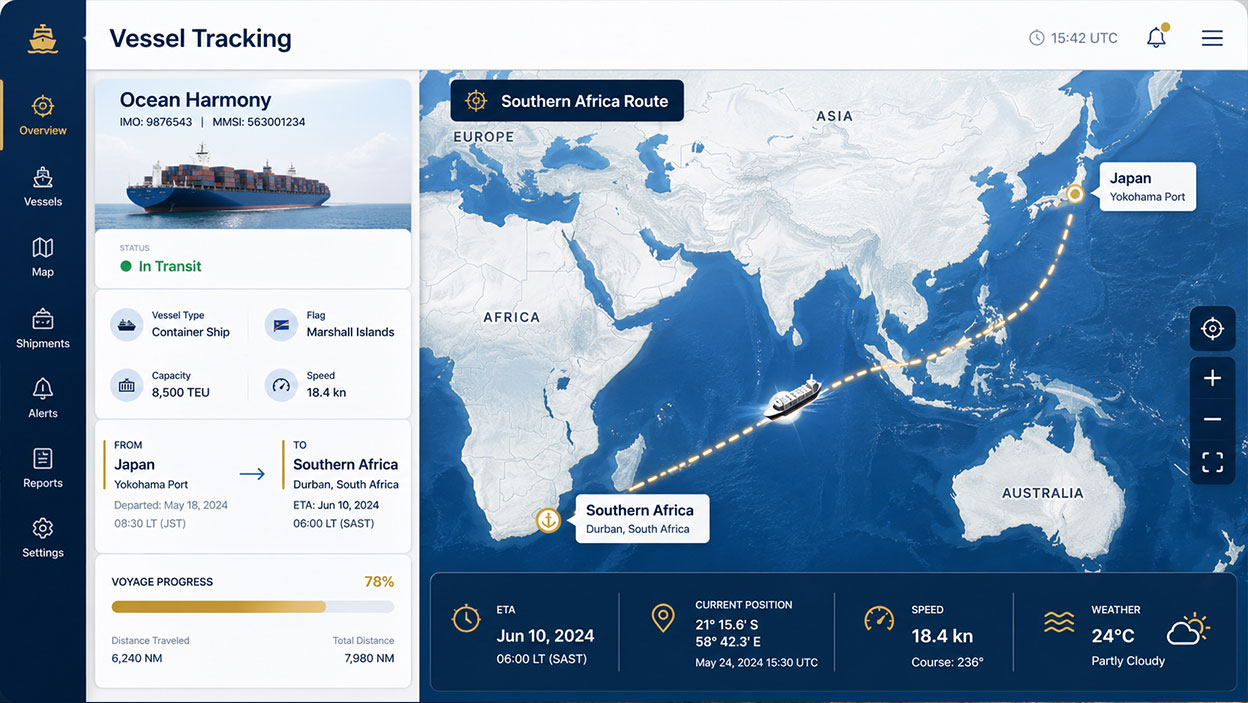
Third, use a shipping tracker once the vehicle is loaded. For example, check vessel name, departure date, destination port, and estimated arrival date.
Finally, create a document folder for invoice, Bill of Lading, export certificate, translation, ID copy, and clearance documents. This simple step can reduce last-minute stress.
What Are the Next Steps to Import a Car from Japan to Botswana?
The next step to import a car from Japan to Botswana is to confirm your budget, choose a suitable vehicle, request a full landed-cost estimate, and prepare your documents before shipment.
First, set your total budget, not just your car budget. For example, if your maximum budget is fixed, ask for a quotation that includes vehicle price, freight, clearance estimate, inland transport, and registration-related costs.
Second, choose a vehicle based on use case. For example, a city driver may choose Toyota Aqua, while a family buyer may prefer Toyota Fielder or Honda Shuttle.
Third, work with a reliable exporter and clearing agent. For example, ask the exporter for vehicle photos, auction sheet, invoice, shipment route, estimated timeline, and document process.
Finally, keep communication clear. Ask these questions before payment:
- What is the FOB price?
- What is included in the quote?
- Which port will the car arrive at?
- Is freight included?
- Who handles the Bill of Lading?
- What documents will I receive?
- Who handles customs clearance?
- What is the estimated landed cost?
In addition, save copies of every document. A clean document trail protects you throughout the import journey.
How UFS Auto Helps You Import a Car from Japan to Botswana
UFS Auto helps Botswana buyers import cars from Japan by managing the key steps from vehicle sourcing to export documentation, shipping coordination, and delivery support.
First, UFS Auto helps you find the right Japanese vehicle based on your budget, preferred model, mileage, year, and final destination in Botswana. For example, if you are looking for a fuel-saving daily car, UFS Auto can help you compare options like Toyota Aqua, Honda Fit, Toyota Vitz, and Toyota Corolla Fielder.
Second, UFS Auto supports both ready stock purchases and Japan auction sourcing. If you want a faster option, you can choose from available stock. If you want more variety, UFS Auto can help source vehicles from Japanese auctions and guide you through auction sheet details such as grade, mileage, scratches, repairs, and overall condition.
Third, UFS Auto handles the Japan-side export process. This includes preparing the required export documents, coordinating with shipping partners, and arranging shipment from Japan to a suitable port for Botswana-bound imports.
In addition, UFS Auto works with reliable logistics partners to support the shipping route from Japan to Southern Africa. Since Botswana is landlocked, vehicles are usually shipped to a nearby port such as Durban or Walvis Bay, then moved inland toward Botswana.
Moreover, UFS Auto helps buyers understand the full import cost before making a decision. This includes vehicle price, Japan-side charges, freight, and other estimated import-related costs, so you can plan with more confidence.
With UFS Auto, the process becomes simpler:
- Tell us your budget and preferred vehicle
- We help you find suitable options from Japan
- You confirm the vehicle and quotation
- We support the purchase and Japan-side export process
- We arrange shipping coordination
- We provide the required export documents
- Your clearing/logistics process begins for Botswana
- You receive your vehicle and complete local registration
UFS Auto makes importing a car from Japan to Botswana easier by combining vehicle sourcing, auction support, export documentation, and shipping coordination in one process.
Want to Import a Car from Japan to Botswana?
UFS Auto can help you source the right vehicle, confirm the cost, arrange Japan-side export documents, and coordinate shipping to Botswana.
Send Your Budget & Preferred ModelShare your budget, preferred model, and destination city to get started.
Conclusion
Importing a car from Japan to Botswana is easier when you work with an experienced exporter that understands vehicle sourcing, documentation, shipping, and import support.
First, the process starts with choosing the right vehicle. UFS Auto helps Botswana buyers find suitable Japanese cars based on budget, model, mileage, year, fuel economy, and intended use.
Second, UFS Auto supports the key export steps from Japan, including vehicle purchase guidance, auction support, export documentation, and shipping coordination. This helps reduce confusion and gives buyers a clearer import journey.
Finally, the best import experience starts with correct planning. By checking the vehicle condition, confirming the total cost, preparing documents early, and working with UFS Auto, you can import your next Japanese car to Botswana with more confidence.
Ready to import your car from Japan to Botswana? Contact UFS Auto today with your preferred model, budget, and destination city to get a full Japan-to-Botswana import quotation.